

Students and graduates
Language assistants in Mexico

About the program
Description
Support French Teaching in Mexico
¡Disfruta tu aventura mexicana!
Spend 8 in Mexico while earning a salary! Assist French teachers by working as a language assistant at the university level.
Profile
University students, college graduates, or those who obtained their degree within the past 5 years.
Schedule and Duration
8 months
From September to April. Dates are subject to change.
14 hours
Per week.
Compensation
Approx. 12,000 MXN/month + $1,500 grant
To help cover program-related expenses.
Good to know
Some key figures about the program
- 3 positions per year in the State of Querétaro
- Program established in 2009
Mexico at a glance

16.4°C
on average during the stay

10th in the world
in terms of largest population

130 million inhabitants
3 times more than Canada, in a territory five times smaller

2 hours
behind Québec

Around 70 Indigenous languages
There is no defined official language. Spanish is the most widely spoken, but it holds the same status as Indigenous languages
Application deadline: January 31
Apply now!
This program has a limited number of spots available each year. Submit your application by including the following documents:
Handbook for participants
Reference document
Handbook for participants - Appendices
Reference document
Application form
Document à soumettre
Up-to-date CV
Document to submit
Letter of recommendation written by someone (teacher, employer, etc.) who can attest to your skills relevant to the program.
Optional
Help with completing the application form
After submitting your documents, you will receive an email confirmation of receipt and compliance within one week.
Mandated by the Ministère de l’Éducation du Québec
Éducation internationale is mandated by the Ministère de l’Éducation du Québec to manage this program. It is jointly administered by Éducation internationale and its British partner, the British Council.
To consult the program's normative framework, please visit Québec.ca.
The program offers Québec students and recent graduates the opportunity to take on a support role in French language teaching at the primary, secondary, college, or university level, depending on the host country. Each year, around fifty language assistant positions are available, with a workload of 12 to 18 hours per week.
As part of their duties, assistants are expected to:
- Support the teacher in their tasks.
- Prepare educational activities.
- Lead certain activities that enrich the language curriculum, with a focus on oral communication.
- Motivate students in learning French.
- Share their lifestyle and culture of origin with the students.
Assistants are not allowed to:
- Replace a teacher in tasks that are specifically reserved for them.
- Perform administrative tasks that explicitly fall under the teacher’s responsibilities.
- Supervise groups of more than fifteen or fewer than two students without the teacher being present.
- Grade assignments.
- Work exclusively with students who have behavioral or learning difficulties.
- Work exclusively with disruptive students or those with emotional disorders.
- Organize, supervise, or grade exams.
- Work exclusively with allophone students.
In general, school and extracurricular activities organized by assistants take place under the supervision of the person in charge of the foreign language program at the educational institution. When the same task is carried out in multiple institutions, school administrators ensure, if necessary, appropriate transportation and a flexible distribution of working hours.
It should be noted that exceptional circumstances may lead to changes in the assigned tasks.
Before starting their work, assistants may benefit from an observation period with the groups, offering them the opportunity to:
- Familiarize themselves with the teacher’s pedagogical practices and understand how students are rewarded or corrected.
- Understand the dynamics of each group and identify behaviors that are expected, tolerated, or prohibited in class.
- Learn the students’ names and assess their language level.
The language assistant program is designed for Québec students who want to experience a paid linguistic and professional immersion abroad. Students from all fields of study are welcome to participate in this program.
To be eligible and proceed to the selection interview, you must:
- Be at least 18 years of age as of January 1 preceding the departure.
- Have obtained a diploma of college studies before the start of the program, be in the process of obtaining a university degree, or have obtained their college diploma or university degree within the five years preceding the start of the program.
- Be a Canadian citizen.
- Be a resident of Québec as defined in the Regulation respecting the definition of resident in Québec (CQLR, c. E-9.1, r.2).
- Have an excellent command of French (French is their first language) OR have a similar level of proficiency in French.
- Have intermediate-level proficiency in the language of the host country; the recommendation is that you have taken at least two college or university courses in this language.
Note: the international partners may set other eligibility criteria which will be communicated to the candidates in advance.
Date
Description
January 31st
Application deadline
To apply for the language assistant program, you must send us the required documents listed in the “Apply now” section of this page, before January 31:
- The registration form
- Your CV
February
Interview
Once the applications have been received, the Échanges Azimut team will carry out a pre-selection. If your application is shortlisted at this stage, you will be invited to an online interview. The criteria on which you will be assessed include, among others, the following:
- Excellent command of spoken French.
- Good knowledge of the language and culture of the host country.
- Demonstrated potential and skills in teaching.
- Motivation and ability to promote Québec culture and the French language.
- Strong adaptability in an international immersion context.
Échanges Azimut may add certain criteria to ensure the excellence of selected applications.
March/April
Interview Results by Email
The results of the interviews will be sent to you by email in March or April.
If the result is positive, your participation in the program will be officially accepted, and a commitment and consent form will be sent to you. You will need to sign it and return it to us.
Mid-June
Pre-Departure Training in Québec city
To help you prepare for the assignment entrusted to you, a pre-departure training session will take place in Québec city with all selected candidates. Essential information will be shared during this training, which is why attendance is mandatory to participate in the program.
June/July
Announcement of your assigned region
The placement locations will be communicated to the selected candidates. We strive to take your preferences into account. However, our primary responsibility is to respect the interests of our partner and its institutions. Therefore, you must remain flexible regarding the position offered to you and understand that, for various reasons, we cannot guarantee each selected candidate’s first choice.
The host school will make initial contact with you toward the end of June.
July
Pre-departure procedures
You will be guided through the steps to obtain your work visa and complete other administrative formalities.
September/October
Start of the language assistant assignment
The long-awaited moment! After a short observation period, you will begin your assignment as a language assistant in the educational institution to which you have been assigned.
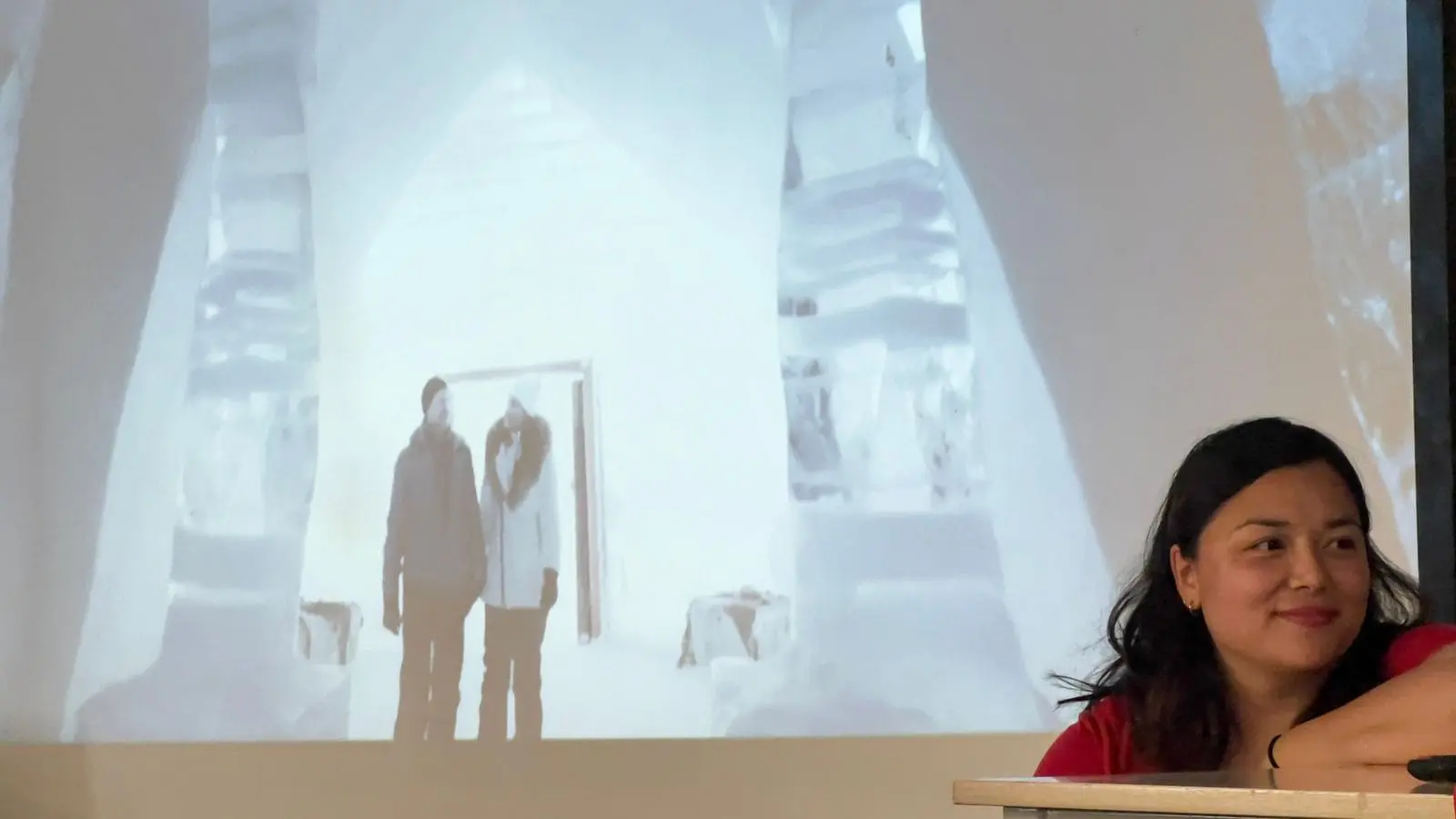
Pour célébrer El Dìa de los muertos, Irene, la directrice de notre école a proposé de faire visiter aux assistant-e-s de langue l’établissement situé à Jalpan, un village dans le désert à 3h de Santiago de Querétaro où se trouve l’école où j’enseigne.

La vie au Mexique est certes bien différente, mais c’est précisément ce qui rend l’expérience si riche !
Going abroad is a project that requires careful preparation, so it is important to get the right information before embarking on this exciting adventure! If you still have questions, don’t hesitate to contact our team!
- Administrative documents: medical certificate (sometimes with a fee), criminal record check ($60–$70), passport valid for at least 6 months after the end of your stay ($120–$160);
- Visa application for Mexico: free (or minor administrative fees)
A mandatory trip to Montréal in august; - Plane tickets;
- Settling in your host country and first month’s rent;
- Insurance (health, travel, and liability).
Éducation internationale provides a $1,500 allowance to each language assistant. This amount is paid at the end of the contract, provided the assignment has been completed. It is intended to cover transportation and moving costs, as well as participation in the information session in Québec in June.
The net amount of monthly allowances varies depending on the host country and is calculated based on the average cost of living. This is a salary paid by the host institution or the partner organization.
The approximate net monthly salary is as follows:
- Mexico: approx. 12,000 MXN
While it is not mandatory, your host institution and the person responsible for welcoming you are generally expected to arrange housing for your first few days abroad and then assist you in finding accommodation that suits your preferences and budget. Always make sure to check the total cost and what services are included, such as meals, heating, phone, etc. You should also ask about visitor rights.
You may be asked to provide an advance or deposit for your rent.
Remember that you will need to cover all your expenses, including housing costs, with the allowance you receive.
Check the costs for extra baggage before booking your flight tickets. Some airlines charge higher fees than others, and it can sometimes be more cost-effective to choose an airline with a higher ticket price that includes free baggage.
For international flights, extra baggage fees are often very high, sometimes exceeding $100 per bag.
Stick to the essentials and consider purchasing bulky or heavy items (shampoo, soap, hair dryer, etc.) once you arrive in your host country.
Make sure to bring along materials that could be useful for your activities:
- Posters of Québec
- Tourist brochures and leaflets
- Postcards
- Youth magazines
- Menus
- Photos
- Canadian paper currency
- Other items that might interest students
As a Québec resident and a Canadian citizen, you must fulfill certain tax obligations. Given that their stays are temporary, assistants are considered to be Québec and Canadian residents for income tax purposes. You are required to report any income earned outside Canada to federal and provincial authorities.
Before completing your mandate in the host country, be sure that you have an official document or statements as proofs of the amount received.
For more information, please contact the Tax Services Office.
Declaring income earned outside Canada can be complex, so we recommend consulting an accountant specialized in international taxation to ensure your file is complete and compliant with regulations.
The Ministère de l’Enseignement supérieur (Student Financial Assistance) gives special status to all participants in the program, allowing them to defer the payment of their student loan for a six-month renewable period.
For more information, visit the Student Financial Assistance website.
To remain covered by health insurance, you must be present in Québec for at least 183 days per calendar year (from January 1 to December 31). For most language assistants, the total number of days spent outside Québec annually is less than 183, since the contract spans two calendar years.
Once every seven years, you may be absent for more than 183 days in a single calendar year without losing your eligibility for Québec health insurance. This absence is called the “septennial year” and must be reported to the RAMQ.
For more details, visit the RAMQ website.
If you hold a valid health insurance card, the Régie de l’assurance maladie reimburses professional services (services provided by a doctor, dentist, or optometrist) up to the rates in effect in Québec, even if you paid more abroad.
Important: Medications purchased outside Québec (even if prescribed by a doctor) are not covered. Before leaving, anyone who takes medication regularly should check with their pharmacist to see if it’s possible to obtain the necessary supply for the duration of their absence.
Language assistants assigned to the United Kingdom and Germany benefit from some coverage provided by the foreign partner as part of the program. However, outside your contract dates or when you are on vacation outside the country where you are working as a language assistant, you are no longer covered. Éducation internationale strongly recommends purchasing additional travel insurance.
Language assistants assigned to Mexico must purchase health and travel insurance to be covered for the entire duration of their stay.
Travel Insurance
Travel insurance provides coverage in case of an accident or illness during a trip outside your home province. It can include:
- Hospital, medical, and paramedical care costs
- Loss or damage to luggage
- Trip cancellation
- Accidental mutilation or death
Québec health insurance and travel insurance are complementary. Travel insurance is valid only if you maintain your eligibility for RAMQ during your stay outside the province. Many companies, travel agencies, and financial institutions offer insurance plans. Speak with an agent about the conditions offered (coverage, cancellation, lost luggage, etc.) to get an idea of the different options available.
Liability Insurance
If you rent an apartment, alone or with others, or stay in someone’s home, you must ensure you have coverage in case of accidents in your home, fire, theft, equipment damage, vandalism, etc. If you benefit from your parents’ home insurance, check the conditions offered.
When immersing yourself in an international environment, it’s common to experience culture shock when faced with unfamiliar norms and references.
Discovering new cultures—and gaining a deeper understanding of your own—is an integral part of the language assistant experience. During your stay, you will encounter different beliefs, customs, laws, languages, arts, religions, values, family structures, and social and political systems. In general, discovering a new culture is highly enriching and positive, even if it can feel overwhelming at times.
During your pre-departure training, you will receive advice on how to navigate culture shock and practical steps to make this adjustment period as smooth and rewarding as possible.
Since the programs are divided between two international partners, the administrative structure works as follows: Éducation internationale supports you until your departure from Québec for your host country. The foreign partner then takes over and assists you from your arrival until your return. This approach makes sense, as we are farther from your situation and therefore less able to guide you in certain specific circumstances.
However, this does not mean our door will be closed during this period—we encourage you to stay in touch with us and keep us informed about your experience.